High-quality cardiovascular physiological signals remain difficult to acquire conveniently over the long term through wearable health monitoring due to high monitoring difficulty, significant observational noise, and susceptibility to interference. This represents a persistent practical dilemma for intelligent health monitoring systems.
Recently, Assistant Professor Liyuan Wang’s group from the Department of Psychological and Cognitive Sciences at Tsinghua University, along with collaborators, proposed a unified multimodal generation framework called UniCardio. This framework simultaneously achieves denoising, imputation, and cross-modal generation of cardiovascular physiological signals within a diffusion model, providing a new solution for AI-assisted healthcare in real-world scenarios. The related work, titled "Versatile Cardiovascular Signal Generation with a Unified Diffusion Transformer," was officially published online in Nature Machine Intelligence on December 29, 2025.

The Challenge: Convenience vs. Signal Quality
Cardiovascular disease is one of the leading causes of death globally. For individuals, three key signals reflect the same underlying physiological process from different perspectives:
·Photoplethysmography (PPG): Records subcutaneous microvascular volume changes and is easily collected via wearable devices.
·Electrocardiography (ECG): Reflects myocardial electrical activity but requires strict electrode placement and professional calibration.
·Arterial Blood Pressure (BP): Often considered the clinical "gold standard," it typically relies on invasive or high-burden collection methods.
Current monitoring faces a "dilemma": wearable signals are easy to obtain but prone to noise and motion artifacts, while high-quality clinical signals are uncomfortable, risky, or costly, making long-term continuous deployment difficult.
Past research often broke this down into "single-point tasks," focusing either on denoising, imputation, or modality translation (predicting "hard-to-measure" signals from "easy-to-measure" ones). However, most existing models are task-specific and modality-specific, failing to cover multiple tasks and conditions within a single model or fully utilize the correlations between cardiovascular signals.
UniCardio: A Unified Generative Framework
UniCardio was designed to accomplish two core capabilities within a single framework:
1.Signal Restoration: Including denoising low-quality signals and imputing missing segments in intermittent records.
2.Modality Translation: Synthesizing target signals (e.g., BP) from available ones (e.g., PPG) to provide a more complete view of cardiovascular health.
Technical Methodology
Instead of a simple point-to-point mapper, UniCardio learns the multimodal conditional distribution between signals as different observations of the same physiological system.
·Diffusion Paradigm: It uses a "noise-to-data" generation approach with a unified noising mechanism for all modalities.
·Transformer Architecture: This models dependencies across time and modality dimensions.
·Modality-Specific Modules: Dedicated encoders and decoders extract and restore physiologically meaningful waveform features.
·Task-Specific Attention Mask: This constrains information flow in the Transformer, allowing only relevant interactions between conditional and target modalities, thereby reducing interference.
Continual Learning Paradigm
To handle the rapidly growing combinations of modalities as new signals are added, UniCardio introduces a continual learning paradigm. It incorporates tasks in stages by gradually increasing the number of conditional modalities. Combined with learning rate scheduling and structural constraints, this approach mitigates "catastrophic forgetting" and facilitates knowledge transfer, where training on fewer modalities improves performance on more complex tasks.
Experimental Results and Downstream Applications
UniCardio demonstrated stable and consistent advantages over various task-specific baseline methods in denoising, imputation, and cross-modal translation.
·Enhanced Performance: When additional conditional modalities are introduced, generation errors drop significantly. For example, in PPG and ECG imputation, errors were reduced to one-third of the original magnitude.
·Efficiency: UniCardio achieved superior or more robust results despite having a significantly smaller parameter scale than some generative baselines.
Clinical Utility and Interpretability
The research verified the generated signals in downstream applications like abnormal state detection and vital sign estimation.
·Diagnostic Accuracy: In ECG anomaly detection, UniCardio-restored signals significantly improved detection accuracy and specificity, approaching the performance of real ECG signals.
·Vital Signs: Prediction errors for heart rate and blood pressure were significantly lower than those using only wearable signals or simple statistics.
·Expert Recognition: The framework ensures that generated waveforms retain clinical diagnostic features, such as ST-segment changes or atrial fibrillation patterns, which are recognizable by experts.
·Transparency: The step-by-step denoising process of the diffusion model provides observable intermediate states, enhancing the model’s interpretability and trustworthiness for medical workflows.
Conclusion and Future Outlook
UniCardio advances cardiovascular signal generation from isolated tasks to a unified, scalable framework. This paradigm holds potential not only for robust medical monitoring and assisted diagnosis but also for expansion into fields like brain science, psychology, and cognitive science that rely on multi-source physiological signals.
Research Team and Resources
·Corresponding Authors: Assistant Professor Liyuan Wang and Professor Jun Zhu, Tsinghua University.
·Lead Authors: Dr. Zehua Chen, Dr. Yuyang Miao, and Assistant Professor Liyuan Wang.
·Collaborators: Dr. Luyun Fan (Beijing Anzhen Hospital) and Professor Danilo P. Mandic (Imperial College London).
·Paper Link: http://nature.com/articles/s42256-025-01147-y
·Code Link: http://github.com/thu-ml/UniCardio
Faculty Profile:
Liyuan Wang
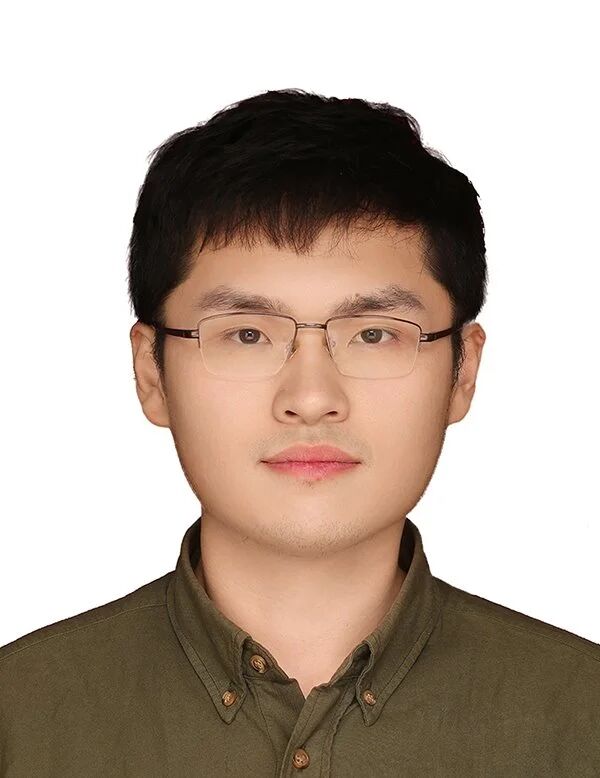
Title: Assistant Professor and Doctoral Supervisor of the Department of Psychological and Cognitive Sciences
Research Direction: Intersection of Machine Learning and Neuroscience